Top Snack Vending Machine Suppliers for Global Buyers
Choosing the right Snack Vending Machine supplier can shape a buyer’s profits, service workload, and customer trust. Global buyers need more than attractive product photos. They must examine machine capacity, cooling performance, payment compatibility, software support, spare-part access, and delivery experience. A machine installed in a Singapore office may face different humidity, voltage, and payment expectations than one serving a university in Germany.
Industry consultant Jeff Adkins has said, “A machine earns trust one transaction at a time.” That principle remains practical. Reliable suppliers explain their testing procedures, warranty terms, remote-monitoring options, and maintenance response times. They also provide clear details about certifications and local technical support. Ask difficult questions early.
No supplier is perfect.
This guide reviews leading Snack Vending Machine suppliers for international purchasers. It considers manufacturing strength, customization, product protection, energy efficiency, and after-sales service. Some suppliers excel at compact machines for offices. Others specialize in refrigerated units, high-volume locations, or cashless retail systems. Their strengths are not interchangeable.
Buyers should also inspect small operational details. Can the machine hold mixed snack sizes? Does the display remain readable under bright sunlight? Can operators receive low-stock alerts before the weekend? These details often decide whether a machine performs smoothly or becomes an expensive cabinet.
The comparison may not remove every risk. It should make those risks visible. A careful buyer still needs local compliance checks, realistic traffic estimates, and a written service agreement before placing an order.
Vending Machine Types and Global Market Applications
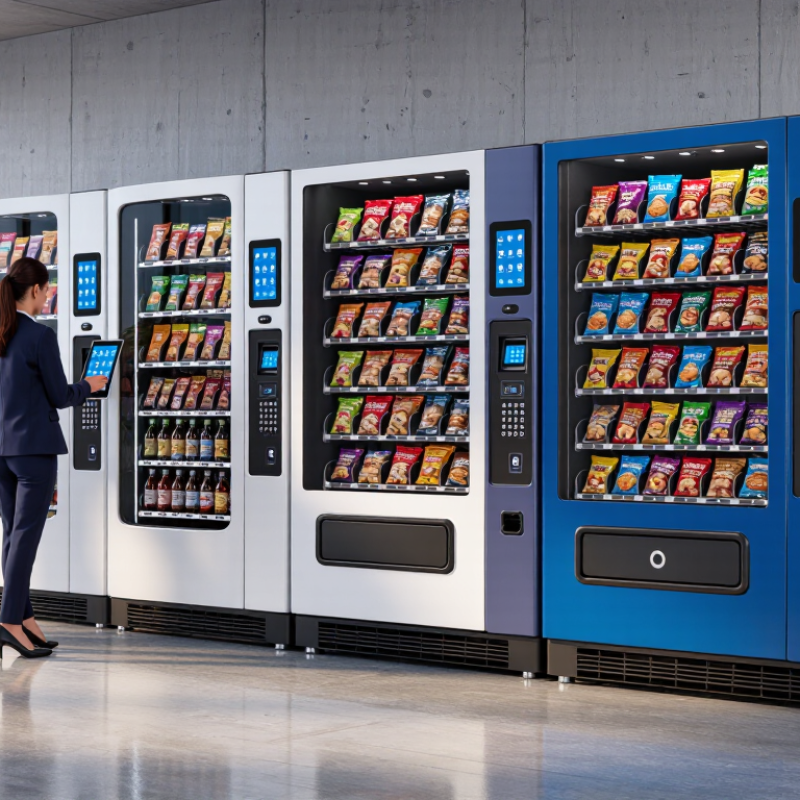
Choosing reliable snack vending machine suppliers starts with matching machine design to the selling environment. Spiral machines suit packaged snacks in offices, factories, and transport hubs. Elevator machines handle delicate products with less product damage. Refrigerated units support sandwiches, fruit cups, and chilled drinks where food safety controls are available. Combo machines save floor space, but their mixed temperature zones require careful planning.
Global applications vary with climate, electricity, payment habits, and customer demand. A machine near a university may need affordable portions and cashless payments. A factory location may require larger selections during shift changes. In hot regions, strong insulation and stable cooling matter. In remote areas, local spare parts and offline payment options can reduce service delays. Small details matter.
Experienced buyers should request temperature records, energy data, warranty terms, and maintenance response times. A short pilot installation can reveal stocking problems that brochures hide. Sales data may also expose weak product choices. I would not assume one successful location proves universal performance. That assumption is risky. Suppliers should explain cleaning procedures, accessibility features, cybersecurity controls, and relevant safety compliance. Operators must also review local rules for food labeling, electrical installation, and public placement. Reliable support often matters more than a low purchase price.
Top Snack Vending Machine Suppliers for Global Buyers – Vending Machine Types and Global Market Applications
The chart compares common snack vending machine formats by their representative product-position capacity. Snack-only machines are widely suited to offices, schools and transport hubs; combo machines support mixed snack-and-drink demand; refrigerated models are used where chilled products are required; and smart lockers are suitable for controlled pickup in workplaces, campuses and residential facilities. Capacity figures show typical commercial ranges rather than supplier-specific specifications or market-share data.
Key Features to Compare Among Snack Vending Machine Suppliers
Top Snack Vending Machine Suppliers for Global Buyers
When comparing snack vending machine suppliers, start with product reliability in real locations. Ask for operating data from machines placed in schools, offices, transport hubs, or outdoor areas. A dependable supplier should explain motor durability, temperature control, payment security, and remote monitoring clearly. Look beyond price. Check whether the machine supports local currencies, multiple languages, contactless payments, and stable network connections.
Service quality often separates suppliers with similar machines. Request warranty terms, response times, spare-parts availability, and technician coverage in your target region. A useful supplier can provide installation guidance, staff training, and practical stocking advice. Test the interface before ordering. The screen should remain readable under bright light, while product spirals should release different package sizes without crushing them. Accessibility features also matter, including suitable screen height and clear payment instructions.
Compare energy use, cooling performance, software updates, and total ownership costs over several years. Ask for transparent information about customs documents, electrical standards, and safety certifications required in your market. A low quotation may exclude delivery, installation, software fees, or replacement parts. That mistake can become expensive. From practical purchasing experience, suppliers sometimes promise broad customization but offer few tested options. Treat every promise carefully, request samples or demonstrations, and record service commitments in writing. No supplier gets every detail right, so flexible communication and honest problem-solving are valuable signs of a reliable long-term partner.
Regional Standards, Certifications, and Import Requirements
Top Snack Vending Machine Suppliers for Global Buyers
Regional compliance determines whether a snack vending machine can enter service smoothly. Global buyers should request test reports, declarations, and complete import documents before signing contracts.
In the United States, electrical equipment may need evaluation by an accepted testing laboratory. Food-contact materials must also meet applicable federal requirements.
European shipments commonly involve CE conformity, electromagnetic compatibility, safety, RoHS, and food-contact rules. Refrigerated models may require additional refrigerant and energy documentation.
Certification language matters. CE marking is not a universal safety certificate.
Canada, Australia, and Gulf markets can require different plugs, voltage approvals, labels, or conformity marks. Importers should confirm HS codes, commercial invoices, certificates of origin, packaging rules, and local-language instructions.
The World Bank’s 2023 Logistics Performance Index compares 139 economies, showing how customs quality and delivery reliability vary sharply by market.
A practical supplier should provide region-specific files, not one generic compliance folder. That shortcut fails surprisingly often.
Procurement teams should also test payment systems, network security, and emergency shutoff functions locally. Standards change. Recheck them before shipment.
Supplier Evaluation: Quality, Pricing, Service, and Logistics
Choosing a snack vending machine supplier requires more than comparing catalog prices. Grand View Research valued the global vending machine market at USD 21.84 billion in 2023, with strong growth expected through 2030. That growth attracts new suppliers, but quality can vary sharply. Inspect steel thickness, cooling stability, payment-system compatibility, and product capacity. Request factory test videos and a sample unit before placing a large order. Small defects become expensive after installation.
Pricing should include freight, spare parts, software fees, customs charges, and warranty labor. A cheaper machine may need more frequent service. Ask for a three-year ownership estimate, not only an invoice price. Service quality matters during real operation. Confirm response times, remote diagnostics, replacement-part availability, and technician training. The World Bank’s 2023 Logistics Performance Index evaluated 139 economies across six logistics dimensions, including customs, tracking, and timeliness. Use those dimensions when comparing delivery routes and supplier promises. I would not accept “fast shipping” without written transit estimates.
Tips: Score each supplier from one to five for quality, total cost, service, and logistics. Check two recent customer references. Test payment recovery after network failure. Keep spare locks and key components onsite. No scorecard is perfect. Weather delays, port congestion, and unclear import rules can still disrupt a careful plan. Supplier transparency is often more valuable than a polished sales presentation.
How to Select the Best Supplier for Your Target Market
Top Snack Vending Machine Suppliers for Global Buyers
How to Select the Best Supplier for Your Target Market
Choosing a vending machine supplier starts with your market, not the machine’s appearance. A busy university needs fast service, affordable snacks, and strong payment flexibility. An office building may prefer healthier products and quieter equipment. Compare product capacity, local voltage, climate resistance, and payment compatibility before discussing price. In my experience, a low quote can become expensive when spare parts arrive slowly. Ask suppliers for installation records, warranty terms, maintenance procedures, and customer references from similar markets.
Tips: Request a live demonstration. Test payment speed, product delivery, and temperature control. Check whether instructions are clear for local technicians. Confirm the supplier can provide commonly needed parts within a realistic timeframe. Review import documents and electrical certifications with a qualified local professional. Requirements vary by country, and assumptions can cause delays.
A reliable supplier should explain limitations instead of promising everything. Ask how the machine performs in heat, humidity, dust, and unstable network conditions. A small pilot order can reveal loading time, product damage, sales patterns, and service response. Keep sales data and repair notes during the trial. They create useful evidence for expansion. No checklist is perfect. I have seen buyers overlook cleaning access because the display looked impressive. The best choice balances machine quality, operating costs, local support, and the habits of your target customers.
Top Snack Vending Machine Suppliers for Global Buyers - How to Select the Best Supplier for Your Target Market
| Target Market | Common Electrical Standard | Recommended Payment Capability | Key Compliance Checks | Operating Conditions to Confirm | Supplier Evidence to Request | Selection Priority |
|---|---|---|---|---|---|---|
| United States | 120 V AC, 60 Hz; Type A or B plug configurations are common. | EMV card, contactless payment, mobile wallets, and remote transaction monitoring. | Electrical safety listing required by the installation site; radio-frequency emissions compliance; accessibility review for public locations. | Indoor or sheltered outdoor use; confirm ambient temperature, humidity, security, and local power capacity. | Safety test reports, payment integration documentation, warranty terms, spare-parts list, and remote-management demonstration. | Payment security and certification |
| Canada | 120 V AC, 60 Hz; Type A or B plug configurations are common. | Contactless cards, chip cards, mobile wallets, and optional cashless-only operation. | Canadian electrical approval or an accepted equivalent; radio equipment compliance; accessibility requirements may apply by province and site. | Cold-weather protection may be necessary for outdoor installations; confirm heater, insulation, and condensation control. | Cold-start test results, enclosure rating, electrical approval documents, and service coverage in the target province. | Climate durability |
| European Union and EEA | 230 V AC, 50 Hz; plug type varies by country, with Type C and Type F widely used. | EMV cards, contactless payment, mobile wallets, and multilingual digital receipts. | CE conformity; electromagnetic compatibility; low-voltage safety; RoHS; REACH; and applicable food-contact material rules. | Confirm operating temperature, energy consumption, noise level, language support, and data-protection controls. | Declaration of conformity, technical file summary, material declarations, energy data, and EU-based service arrangements. | Regulatory documentation |
| United Kingdom | 230 V AC, 50 Hz; Type G plug is standard. | Contactless cards, chip cards, mobile wallets, and cloud-based transaction reporting. | UKCA or applicable accepted conformity route; electrical safety; electromagnetic compatibility; RoHS; and food-contact requirements. | Confirm network compatibility, British plug and fuse configuration, indoor temperature range, and local recycling obligations. | UK declaration documents, payment security information, risk assessment, spare-parts availability, and local technical support. | Local conformity route |
| Australia and New Zealand | 230 V AC, 50 Hz; Type I plug is common. | Contactless cards, mobile wallets, chip cards, and remote payment settlement. | RCM-related electrical and electromagnetic compliance; local electrical installation rules; food-contact material suitability. | Confirm heat resistance, solar exposure protection, ventilation, corrosion resistance, and cellular network coverage. | RCM evidence where applicable, outdoor enclosure test data, thermal test results, and regional service response times. | Heat and outdoor resistance |
| Japan | 100 V AC; 50 Hz in eastern areas and 60 Hz in western areas; Type A plug is common. | Contactless transit-compatible payment options, cards, QR payment, and Japanese-language interfaces. | PSE-related electrical requirements where applicable; radio equipment compliance; Japanese labeling and consumer information. | Confirm frequency compatibility, earthquake stability, compact footprint, language support, and high transaction reliability. | PSE documentation where applicable, vibration or stability test results, Japanese user-interface sample, and local maintenance plan. | Voltage and localization |
| India | 230 V AC, 50 Hz; Type C, D, and M plug systems may be encountered. | QR payment, mobile wallets, cards, and optional cash acceptance depending on the location. | Applicable electrical safety registration, electromagnetic compatibility, packaged-food labeling, and local tax documentation. | Confirm voltage fluctuation tolerance, surge protection, dust resistance, cooling performance, and local connectivity. | Voltage and surge test results, QR-payment integration proof, spare-parts inventory, and in-country service capability. | Power stability and service |
| Gulf Cooperation Council Markets | Typically 220–240 V AC, 50 Hz; plug type and approval process vary by country. | Contactless cards, mobile wallets, QR payment, and remote monitoring with local currency support. | Country-specific conformity requirements; electrical safety; electromagnetic compatibility; food labeling; and import documentation. | Prioritize high-temperature protection, dust control, air-conditioning compatibility, UV resistance, and corrosion protection. | High-temperature test data, dust and water protection rating, conformity documents, payment localization, and regional service contacts. | Heat, dust, and import compliance |
Related Posts
-
Top 10 Snack Vending Machine Suppliers Worldwide
-
China Top 10 Snack Vending Machine Manufacturers?
-
How to Choose the Best Vending Services for Your Business?
-

Vending Services Unveiled: A Comprehensive Analysis of Global Supply Options
-
7 Essential Tips for Choosing the Best Snack Vending Machines for Your Business
-
7 Compelling Reasons to Choose the Best Food Vending Machines for Your Business